
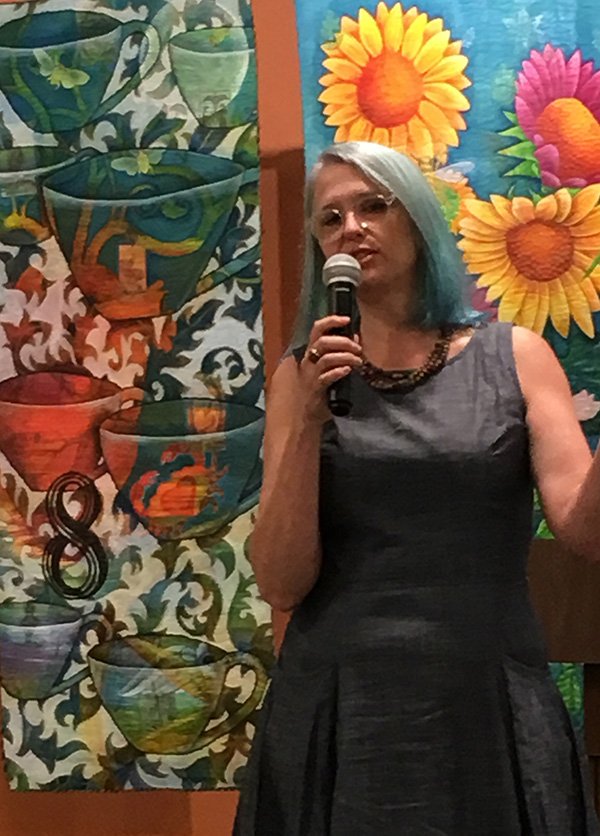
Hi there. I’ve got Judy Coates Perez here with me today for the business interview. Judy has taught for guilds, shops, conventions, craft schools, retreats, small private groups and internationally at a variety of venues.
I’m glad to welcome Judy to the blog today.
Judy and I discuss:
- Her creative journey into the fiber arts and the “crazy ” quilts she started with
- Whether teaching is a viable way to earn a stable income?
- The Challenges of Teaching Textile Art
- A Cheat Sheet on the Best Venues to teach, including the best paying teaching gigs
- Judy’s favorite tools and resources and oh so much more
- PLUS a confidence boost for all of us creatives (watch her on VIDEO)
Let’s get started.
Short on time, but want to check out the interview? Grab the free pdf Judy Coates Perez’s Interview and enjoy at your convenience.
CN: Hi Judy, welcome to this edition of Textile Art Business Interviews.
JP: Hi Clara thanks for reaching out to me.
CN: Judy, as a way of introduction, can you tell us about your background and how you became an artist who uses textiles to create her art?
Judy Coates Perez: Creative Journey into Textile Art
JP: My educational background is in graphic design, and I worked for a number of years in that field before having kids, but I always loved sewing, art and making things.
I began making quilts without having taken any formal classes, other than high school sewing, so I did some pretty crazy things on my first couple quilts, like back one with corduroy, because that’s what I had on hand and cover another with applique scorpions, snakes, and cactus. I learned more about how to put a quilt together after moving to Austin, TX and joining the quilt guild.
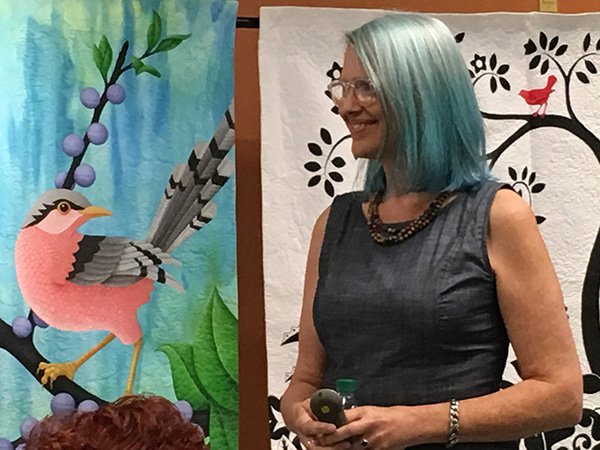
CN: That’s an interesting start to your textile art career, for sure. What is it about textiles that you like to work with them?
JP: I enjoy sewing and I like the added design element a line of quilting can make, as well as the texture and patterning of the quilted surface when combined with my painting and mixed-media work. I really do like working in many art forms, but there came a point when I was juggling quilting, pottery and raising kids that I realized I needed to narrow my focus.
Is Teaching a Viable Way to Earn a Stable Income?
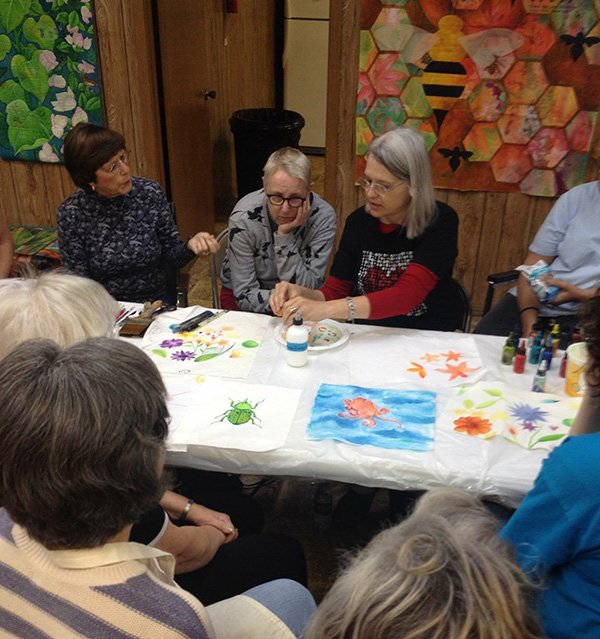
CN: Great!!! Let’s talk about teaching. Many textile artists teach as a way to generate income. You’ve taught for a long time. What’s your opinion on why teaching is the number one way most textile artists make money? Is it a viable way to make a stable income?
JP: I’ve taught textile arts for 11 years, before that I homeschooled my kids. Honestly, I think it’s very hard to support oneself teaching without another revenue stream. Making a living selling artwork is even harder. Not impossible, but if you think about it, people will pay more for a painting on canvas that takes 1/10th the amount of time to paint as an art quilt does to make, so teaching is a more viable option.
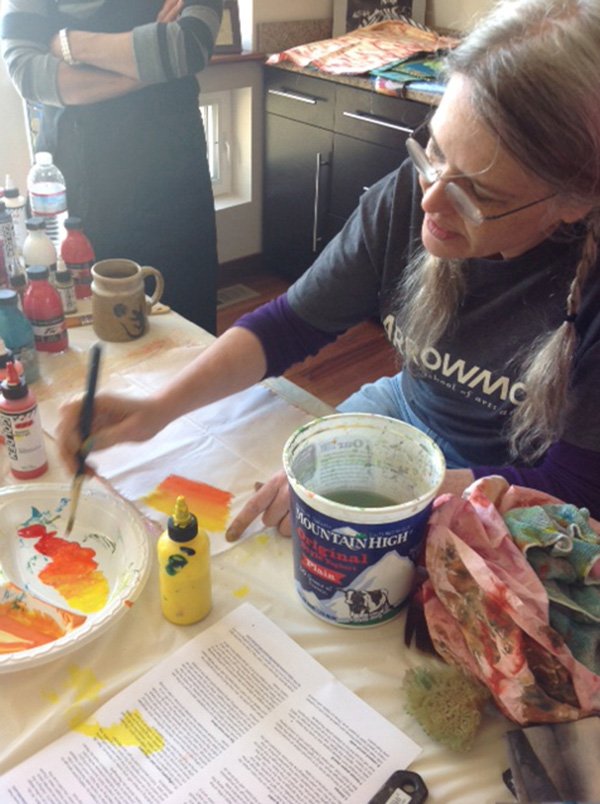
I love the actual teaching time, being with a group of students teaching them new skills, helping them realize painting on fabric’s not magic, it just takes a little time and practice to learn how to control the media. It’s so gratifying when I can see the light go on, and the confidence building, while they learn how to bring the ideas in their heads into reality on fabric. That’s the best!
But teaching is my only source of revenue, and that’s challenging, I live on a very meager income, but one of the perks that has made it worthwhile, is that I’ve had some amazing opportunities to travel and see places I could never afford to go on my own and meet many wonderful people.
The Challenges of Teaching Textile Art
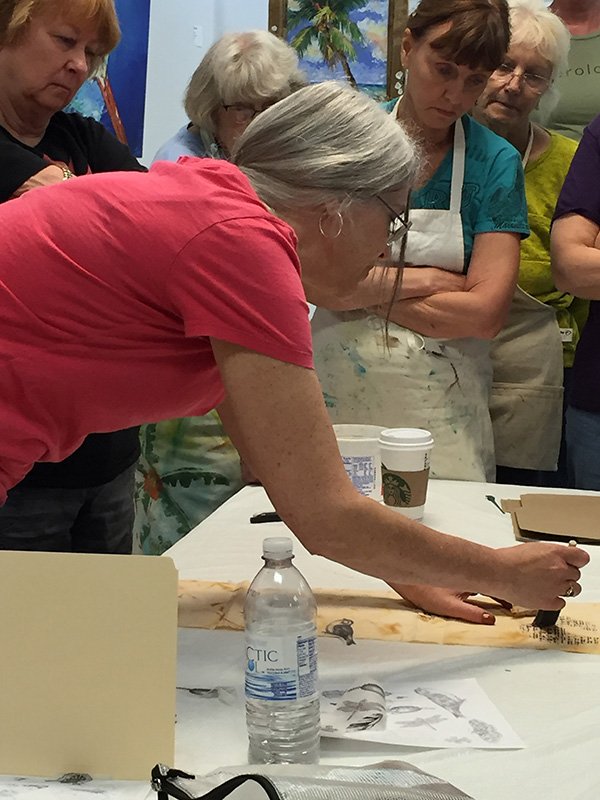
CN: Teaching is very hard work that doesn’t get paid well enough whether you’re a kindergarten teacher or a textile art teacher. Can you talk about some of the things which make teaching textile art so hard?
Staying Healthy is Important
JP: It’s part of the gig economy, there’s no health insurance or benefits, and I would not be able to afford health insurance without the affordable care act, if that goes away I may very well have to stop teaching. Some months of the year can also be very slow (especially during the holidays) when there aren’t conventions and guilds don’t book workshops.
The Textile Art Teacher Pay-Scale
There are many venues, like retreats and conventions, where you only get paid per student, and if your class is less than half-filled it will be canceled. Some quilt conventions and most retreats, do not cover travel expenses or room and board, so if you have low numbers you can actually lose money teaching.
Unlike lawyers, we can’t charge for all the time spent writing emails, answering questions about classes, supplies, and fees, or negotiating dates and contracts, and ordering and shipping supplies.
The Burden of Class Supplies
I try to shift the burden of many workshop supplies to my side and charge a supply fee that covers those expenses. I do this because I’ve learned over the years, if I can make it less complicated for the student and can save them money by doing a shared supply of paint instead of having them buy a full set of colors in small jars, I can fill classes better, and avoid having students accidentally buy the wrong product because they are unfamiliar with it.
I teach a lot of different types of workshops, so I have to stay on top of a pretty large inventory of products to supply for each class. Most of my supplies come from art stores that I can’t get wholesale pricing on, so I do a lot of research finding the best prices and buy large quantities to get the prices down. My credit card bill gets stretched pretty far between gigs.
The Traveling Issue
Travel these days is no piece of cake either. The airline industry is making the whole experience about as miserable as they can. People rarely think about the time involved in transportation, from researching the travel to weighing suitcases repeatedly to make sure they are under 50 pounds each, to spending two days in transit to and from the location, not to mention time zone differences and not being able to fall asleep the night you’ve arrived and then waking up at the equivalent of 3 am your time to start the first day of teaching. The actual teaching is the easiest and smallest part of the job.
Finding Time for Personal Creative Work
One of the biggest things I struggle with is not having enough down time to do my own work. It’s important to have time in the studio to develop ideas and techniques and create new work to enter into exhibits. There is always something that needs to be done business-wise that puts off time in the studio.
CN: Wow Judy, that’s really insightful. Few people talk about this side of teaching. It’s nice of you to give a balanced picture, so thank you.
Judy, you’ve taught at many venues and you know the differences between the venues as well as any teacher possibly could. What are the easiest venues to get into if you’re just starting out and you’re still learning how to navigate this space?
The Best Venues to Start Teaching Textile Art
JP: The best place to start is your local guild, and do workshops with small groups of friends. You want to work out as many timing and logistical sequencing issues and pacing for the class as possible, as well as working out supply and classroom needs.
Then reach out to other nearby guilds. Guilds can often be the surest financial return for your time, since they reimburse your travel and pay a flat workshop fee. I have taught for some wonderfully organized guilds that really make the job pleasurable and I’ve taught for other guilds that make you seriously question why you are doing this.
Teaching Venues which Give You the Biggest Bang for Your Hard Work
CN: If you’re at the point in your teaching career where you’ve got more options, and can be a little selective, typically which venues give you more bang for your hard work as a teacher?
JP: A commercial retreat venue or big quilt conventions can be good because you have multiple days of classes all together with a large audience to pull from to fill classes, but the downside can be that travel expenses and room and board are rarely covered and you are paid per student. Not every venue pays the same rate either, some of the biggest shows pay the worst.
The Best Places to Teach for Fun
CN: If you have the luxury of teaching with no need for money but only for fun, which are the best venues for you to teach?
JP: Definitely the week-long workshop opportunities at retreats or craft schools. The amount of learning and development of a student’s skillset is so much bigger. The pace of the class is a bit slower and more conducive to better work being made as well.
One day classes can move at such a fast pace it’s hard to get everything in over such a short period of time without feeling rushed. The craft schools have been my favorite, but the absolute worst for paying gigs.
CN: Judy, did you try other ways of earning an income from textile arts before settling on teaching? If yes, what are they and why did you choose to teach over the other sources of income?
JP: I started teaching when I was married and had previously stepped away from working as a graphic designer to homeschool my kids.
I had been making art quilts for about 15 years, and had won quite a few awards and had work published in books and magazines.
I had a blog with a fairly good following and got asked questions on techniques, process, and supplies which really helped me understand the kind of things people wanted to learn from me when I started getting inquiries about teaching in 2005.
I began teaching initially, as a way to pay for fabric, supplies and show entries, but then the recession happened, my marriage broke up, we lost our home and life savings, there was no money for alimony, and I didn’t have the up-to-date computer skills required to be employable as a graphic designer, so I just had to keep doing what I was doing, and continuously find ways to supplement my teaching income to make ends meet.
In many of my mixed-media classes, I have developed products that I sell like; thermo-fax screens and a sheer tissue weight paper that I print images on and use for collage on fabric.
I have also written, designed and self-published four instructional books that supplement my workshops. Without selling products I wouldn’t be able to keep my head above water.
Honestly, I think there are a lot easier ways to make money, and I often weigh the pros and cons of teaching, especially as I age, but right now I don’t have a financial safety net to consider transitioning into something else.
I think I would love teaching a lot more if I could do it a little less.
CN: Judy, I love a candid interview and you have been nothing less than that in this interview. There are two segments I include in every interview because readers really enjoy these segments.
The first is this: “What are your five favorite tools, supplies and resources?” They can be tools you use in your studio, books, anything you really love that has helped you/ helps you a lot. Readers love to use the same things their favorite artists use.
(These contain affiliate links which means if you purchase something through such a link, I’ll get paid a small fee at no charge to you. Thanks for supporting my content creation.)
- I love cheap sketchbooks like Fabriano’s EcoQua staple bound notebook
Hardcover sketchbooks intimidate me, they feel too serious to me – like every page has to have an interesting drawing on it or something. I prefer less formal sketchbooks like Fabriano makes. I can have a bunch of them in different sizes, they have nice paper, are flexible and I can easily stick one in my bag it’s not heavy and won’t take up a lot of space.
- Knowing color theory is crucial, Nita Leland writes great books on color with lots of examples in different media and helpful exercises to learn about different color palettes. I love her book Confident Color.
- I love a smoothly woven, high-thread-count, Prepared For Dyeing (PFD) fabric for painting
- Mistyfuse is my favorite fusible web. I use it mostly for fusing my quilt tops to the batting as an alternative basting method. I love that it has a strong fuse and is virtually undetectable in the hand of a quilt.
- I transfer all my paints into squeeze bottles with twist tops from SKS Bottle. This helps prevent wasting paint by making it easier to put a smaller amount of paint on your palette. I use 8-ounce bottle for a class supply size and one-ounce bottles for travel and for my own supply to use when teaching.
CN: What are 6 tips you can give to someone who is just starting out on how to find the best venues to teach?

- In California, we have the Northern California Quilt Council ncqc.net
that has an online listing resource for teachers and they also have 2 meetings a year where you can give a 3-minute presentation on the classes you teach to guild organizers.
- I don’t know if other states host something like this, but it’s a great place to get noticed by guilds over a large area.
- Have great business cards that show your work on one side with your information on the other. Make a point of sharing your card with people when you get asked about what you do.
- Many quilt and fiber art magazines have listings in the back of venues for retreats, conventions and craft schools that you can contact about teaching.
- Ask friends where they have taken classes that they’ve liked and ask friends who teach where they’ve had good experiences teaching.
- If you want venues to consider booking you it’s important to have name recognition. Name recognition can come from entering exhibits, winning awards, writing articles for magazines, writing a book, using social media like Instagram or having a professional Facebook page, and keeping a blog where you showcase and write about your work.
CN: Thanks Judy for coming on the blog and sharing your wisdom with us. It’s been wonderful
JP: You’re so welcome.
And Judy has a word of encouragement for all of us creatives. Watch the video below.
Confidence Boost for Creatives
To learn more about Judy Coates Perez and the courses she teaches visit her at her website.
Interview Highlights & Quotes
- I did some pretty crazy things on my first couple quilts, like back one with corduroy
- I enjoy sewing and I like the added design element a line of quilting can make
- One of the perks that has made ]teaching] worthwhile, is that I’ve had some amazing opportunities to travel and see places I could never afford to go on my own and meet many wonderful people.
- I think I would love teaching a lot more if I could do it a little less.
- I hope you enjoyed this totally honest interview with Judy. I certainly did.
Warmest Regards

In this episode of Textile Art Business Interviews, we’ll be discussing textile art coaching. I’ve got Sue Bleiweiss here with me to help us with that. Sue is an artist, a teacher, and an author of multiple books.
I’m glad to welcome Sue to the blog, today.
Sue and I discuss:
- Her creative journey to fiber art
- Art coaching – what it is and why you need it
- The most common fear coaching students have
- How to figure out if you’re ready to become a coach
- Tons of tips and Sue’s favorite tools and resources
Let’s get started.
Short on time, but still want to check out the interview? Grab the free pdf Sue Bleiweiss’ Interview and enjoy at your convenience.
CN: Hi Sue, welcome to the Clara Nartey Blog for this episode of Textile Arts Business Interview
SB: Hi Clara, I’m happy to be here, thanks for asking me to be a guest on your blog.
Sue Bleiweiss’ Journey in the Creative Arts
CN: Can you tell us a little bit about yourself and your personal journey into textile art? What were your early influences? How did you make the decision?
SB: I began my career in art about 15 years ago. I had just decided to leave my corporate job for a slower less hectic lifestyle and signed up for a weaving class. I was hooked from the first moment I held the shuttle in my hand. I wove for a few years doing a lot of commission work until a shoulder injury forced me to hang up my shuttle.
At that point, I made an attempt at making traditional quilts, which didn’t go well because I hate following directions.
Once I realized that I just didn’t have the patience or skill for traditional quilt making I started exploring mixed surface design and mixed media techniques and that led to becoming obsessed for quite a few years making books and journals.
Something I still love to do. I started dabbling in art quilts as a way to explore creating art to hang on the walls and that led me to where I am today.
Sue Bleiweiss’s Love for Fabrics
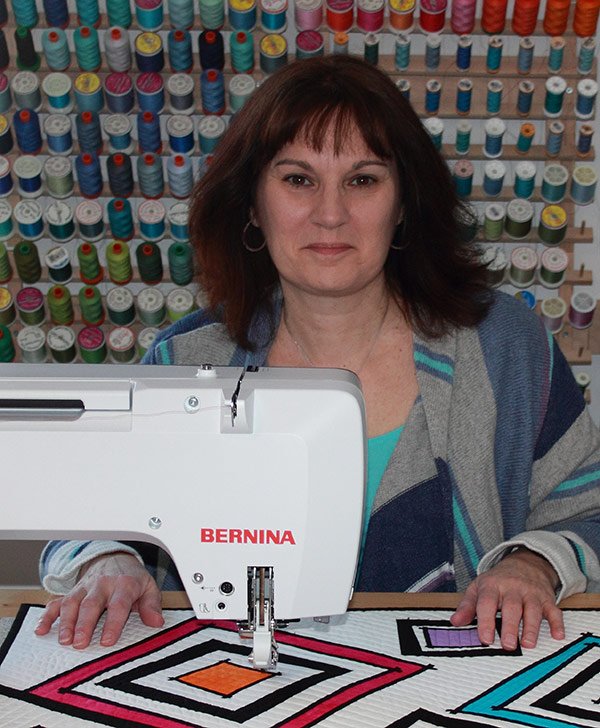
CN: What is it about fabrics that you like working with them? Many textile artists talk about the tactile nature of fabrics. Is it the same reason for you or do you have others?
SB: Well there are a couple of reasons I like working with textiles – the tactile nature is definitely one of them. The other big reason for me is that I really enjoy dyeing my own fabrics to work with. It’s a very satisfying full circle process for me to start with plain white cloth, dye it and turn it into a vibrantly colored art quilt.
CN: Being a full-time artist means engaging in some income-generating activities to support your art career. For you, one of the things you do to achieve this is to coach artists. What is coaching about?
SB: My coaching program is about helping artists identify their goals and map out a strategy to achieve them.
What is Textile Art Coaching And Who Needs it?
CN: Sue, you teach workshops as well as coach artists. Why is there a need for textile art coaching when you’re already teaching workshops? And who is coaching suitable for?
SB: My workshops and coaching programs are two very different things. In my workshops, I teach techniques specific to the way I work and create art quilts.
My coaching program is more like an independent study process and I offer my help and expertise in a wide variety of subjects such as artistic development (design, critique, personal style development), business and marketing, and writing for print publications.
I have and am currently coaching a lot of artists each at a different stage of their artistic journey from beginner to advanced. Some are working towards developing a cohesive body of work and are primarily interested in artwork critique and feedback and others are looking for guidance with business development topics such as marketing and publishing.
Textile art coaching is for any artist at any stage of the journey that is seeking clarity, guidance or support with their studio practice or their artistic development.
CN: In your experience, what is the most common fear or need or concern your coaching students have when they start with you?
SB: Artistic development and the desire to create a cohesive body of work is by far the most popular request for help from my clients that I get.
What Do You Need to Get into Textile Art Coaching?
CN: Who can become an art coach? What do you need to know or what characteristics do you need to have to coach other artists? Or in other words, when do you know you’re ready to become one?
SB: I think being an effective coach requires a few things: certainly you have to have a high level of expertise and confidence in the subjects you’re offering coaching in but I think you need more than that. An effective coach knows how to listen, how to provide critique and feedback that is encouraging and motivating and knows how and when to ask the right questions that can allow the artist to draw their own conclusions and build self-confidence.
Is Textile Art Coaching A Viable Business Option?
CN: There are many paths to building a successful art career. My mission is to help artists carve out their own paths in starting or building their businesses. So, this question is a purely business one. In your mind, is coaching a viable art business activity? Is it financially worth the effort?
SB: Well for me personally, the financial side of the coaching has very little to do with why I offer it. My primary motivation for coaching is because I really enjoy it. There is an incredible amount of personal satisfaction for me to be able to share my experiences and knowledge with a fellow artist to help make their artistic journey a little easier.
Coaching is just one aspect of my studio practice – I teach, I write and I make art and all of those things are important to me so I have to make sure that I manage my commitments so I have time for all of them.
Is coaching a viable business activity? Yes, but for me, it’s a small part of my overall studio practice and my primary motivation for offering it is the personal satisfaction I get from doing it. I’ve set the pricing for my coaching to reflect that in order to make it accessible to as many artists as I can.
Sue Bleiweiss’ 6 Tips on Textile Art Coaching
CN: What six (6) tips can you give about coaching textile artists, that you’d only share with a close friend?
SB: I’d give this advice to anyone considering coaching

- Be willing to share it all – by that I mean you have to be willing to share all your knowledge, you can’t hold anything back.
- Communication skills are absolutely critical: You must be comfortable being able to provide honest constructive guidance and feedback to your client. Each client’s needs will be different and you need to be able to adjust your style of communication to suit those needs so that the client will be receptive to what you are saying to them.
- Honesty is paramount for a successful coaching relationship. You have to be comfortable giving candid straightforward feedback and you need to be able to do with diplomacy and tact in a helpful non-confrontational way in order for the client to be receptive to it.
- Be prepared! Keep notes and review them before each meeting with your client. I also like to do a follow-up email after a meeting to review and recap what was discussed.
- Take it seriously – by that, I mean that you can’t take the role of being a coach lightly. You have to be invested in the success of your client and it’s your job to help them find and gain the confidence they need to develop and grow.
- Listen, listen, listen!
Sue Bleiweiss’ 5 Favorites
CN: What are your 5 favorite tools or resources you can’t do without as a textile artist?
- Mistyfuse: the only fusible that I use in my studio.
- KAI Scissors: I tossed out all my other scissors after I bought this brand. My favorites are the KAI 7205 8” professional shears and I also have a pair of the 7170 and 7100 ones.
- Superior Threads King Tut 40wt cotton: and Superior Threads MonoPoly: I used to change out my bobbin thread to match the top thread but not anymore. Now I always use Superior monopoly in my bobbins.
- 400 Bleached Desized Mercerized Cotton Print Cloth from Testfabrics
- Procion Dye & Soda Ash: From Dharma Trading: and ProChemical and Dye
And here are some more resources Sue generously agreed to share with all my readers. Thanks, Sue.
- The studio practice questionnaire that Sue has all her clients fill out prior to their first meeting.
- Get Sue Bleiweiss’s Resources: A document showing the tools and supplies Sue uses.
For even more from Sue, check out her books and learn more about her art coaching.
Warmest regards,